
When people talk about the biggest airports in the world, they often mean passenger traffic or the size of the terminal. But another fascinating way to measure an airport is by its total land area in square kilometers.
Some airports occupy enormous areas of land, including runways, taxiways, terminals, cargo facilities, maintenance zones, undeveloped land, and future expansion areas. In fact, the world’s largest airport by land area is so large that it covers hundreds of square kilometers.
The ranking below focuses on airport land area, rather than passenger numbers. Published figures can vary slightly because different sources may include different operational, reserve, or development areas.
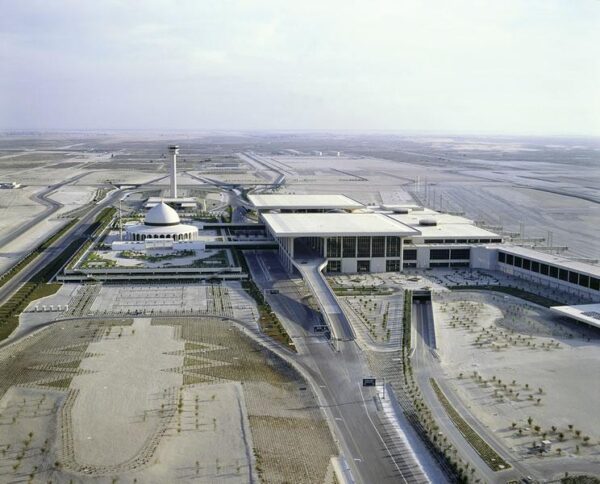
1. King Fahd International Airport – 776 km²
Location: Dammam, Saudi Arabia
Airport Code: DMM
Land Area: Approximately 776 square kilometers
King Fahd International Airport is widely recognized as the largest airport in the world by land area. Located near Dammam in Saudi Arabia, its enormous site covers approximately 776 square kilometers.
The sheer size of King Fahd International Airport makes it dramatically larger than the other airports on this list. Much of the airport’s total property includes areas beyond the terminal buildings and runways, demonstrating why land-area rankings can look very different from passenger-traffic rankings.
The airport serves Saudi Arabia’s Eastern Province and is an important gateway for the region.
2. Denver International Airport – 137.8 km²
Location: Denver, Colorado, USA
Airport Code: DEN
Land Area: Approximately 137.8 square kilometers
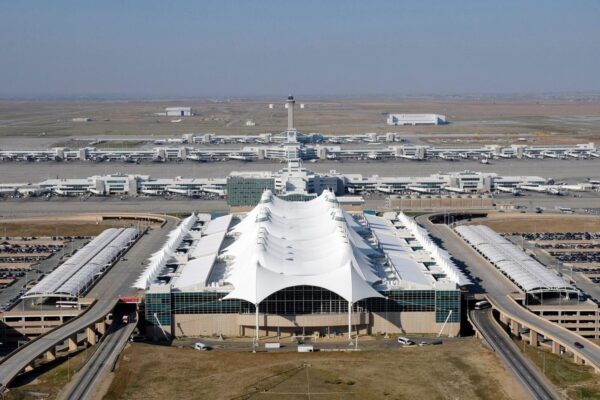
Denver International Airport is the second-largest airport in the world by land area according to commonly cited airport-property measurements.
The airport officially states that it operates on 53 square miles, or about 137.8 square kilometers, of land. DEN also notes that its property is roughly twice the size of Manhattan.
Opened in 1995, Denver International Airport has considerable room for expansion. Its huge property contains multiple runways, terminals, transportation infrastructure, and large areas reserved for future development.
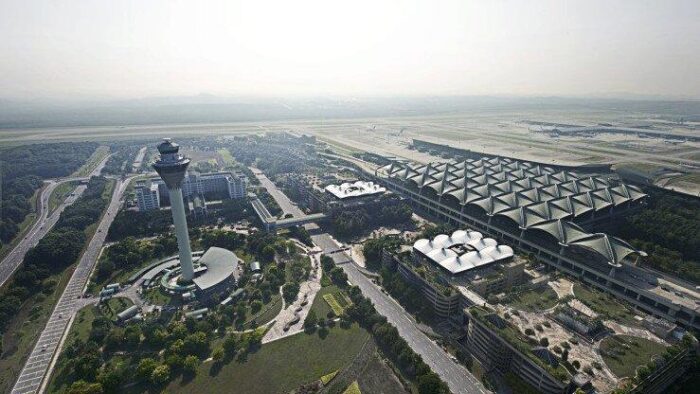
3. Kuala Lumpur International Airport – 100 km²
Location: Sepang, Malaysia
Airport Code: KUL
Land Area: Approximately 100 square kilometers
Kuala Lumpur International Airport, commonly known as KLIA, is one of Southeast Asia’s largest aviation facilities by land area.
Its approximately 100-square-kilometer site provides extensive space for passenger operations, aircraft movement, cargo, transportation infrastructure, and future development.
KLIA is a major international gateway to Malaysia and plays an important role in connecting Southeast Asia with destinations around the world.
4. Istanbul Airport – 76.5 km²
Location: Istanbul, Türkiye
Airport Code: IST
Land Area: Approximately 76.5 square kilometers
Istanbul Airport is one of the world’s largest modern airport developments. The airport occupies approximately 76.5 million square meters, equivalent to 76.5 square kilometers. Turkish government information describes the project as being developed in phases, with significant future capacity planned.
Its location on the European side of Istanbul gives it an important position between Europe, Asia, and other international markets.
The airport opened in 2018 and was designed with long-term expansion in mind.
5. Dallas/Fort Worth International Airport – 69.7 km
Location: Texas, USA
Airport Code: DFW
Land Area: Approximately 69.7 square kilometers
Dallas/Fort Worth International Airport is one of the largest airports in the United States by physical land area.
DFW officially reports that it covers more than 26.9 square miles, with approximately 17,183 acres of real property. That works out to roughly 69.6–69.7 square kilometers.
The airport is positioned between Dallas and Fort Worth and operates like a small city, with its own police, fire, emergency, medical, and other infrastructure.
6. Orlando International Airport – 53.8 km²
Location: Orlando, Florida, USA
Airport Code: MCO
Land Area: Approximately 53.8 square kilometers
Orlando International Airport is one of Florida’s major aviation hubs and serves millions of travelers visiting the Orlando region.
Its large airport property includes terminals, runways, taxiways, aircraft parking areas, roads, parking facilities, and other aviation infrastructure. The airport’s official media center provides aerial photography showing just how extensive the MCO site is.
Its large footprint is particularly useful for accommodating continued growth in one of the world’s major tourism destinations.
7. Washington Dulles International Airport – 47.8 km²
Location: Virginia, USA
Airport Code: IAD
Land Area: Approximately 47.8 square kilometers
Washington Dulles International Airport serves the Washington metropolitan area and is another major U.S. airport with an exceptionally large physical footprint.
The airport’s extensive property includes its terminals, runways, taxiways, aircraft facilities, roads, parking areas, and land available for airport-related development.
Its location outside central Washington gives the airport considerable space compared with airports situated closer to dense urban areas.
8. Beijing Daxing International Airport – 47 km²
Location: Beijing, China
Airport Code: PKX
Land Area: Approximately 45–47 square kilometers
Beijing Daxing International Airport is one of the world’s most recognizable modern airports. The Beijing municipal government states that the airport covers 45 square kilometers, while other current airport-size sources use approximately 47 square kilometers for the broader airport site.
The airport opened in 2019 and features its famous starfish-inspired terminal designed by Zaha Hadid Architects.
The terminal itself covers approximately 700,000 square meters, making it one of the world’s most impressive airport buildings.
9. George Bush Intercontinental Airport – 44.5 km²
Location: Houston, Texas, USA
Airport Code: IAH
Land Area: Approximately 44.5 square kilometers
George Bush Intercontinental Airport is Houston’s primary international airport and an important hub for long-haul travel.
Houston Airports says the airport spans more than 11,000 acres, while historical airport documentation has listed approximately 10,030–10,080 acres depending on the measurement and reporting period.
The large property accommodates multiple runways, terminals, aircraft facilities, cargo operations, road infrastructure, and additional airport development.
10. Shanghai Pudong International Airport – 40 km²
Location: Shanghai, China
Airport Code: PVG
Land Area: Approximately 40 square kilometers
Shanghai Pudong International Airport completes our list of the 10 biggest airports in the world by square kilometers.
The airport occupies approximately 40 square kilometers and is located east of central Shanghai. Its extensive property supports passenger terminals, multiple runways, cargo facilities, aircraft parking areas, and supporting infrastructure.
Pudong is also a major international and cargo gateway for China, making its large physical footprint particularly important for aviation and logistics.
Why Are These Airports So Large
Airport land area is not determined by the size of the terminal alone. A modern international airport needs huge amounts of space for:
- Runways and taxiways
- Aircraft parking and gates
- Passenger terminals
- Cargo terminals
- Maintenance facilities
- Airport roads
- Parking areas
- Fuel and utility infrastructure
- Safety zones
- Landscaping and environmental areas
- Future expansion
- Commercial and logistics development
This explains why an airport can occupy dozens or even hundreds of square kilometers while its terminal building occupies only a small portion of the overall property.
Airport Size vs. Passenger Traffic
It is important to remember that the biggest airport by land area is not necessarily the busiest airport by passengers.
For example, Denver International Airport has an enormous land footprint, while other airports can handle extremely high passenger volumes on much smaller properties.
Land area measures the physical size of an airport’s property. Passenger rankings measure the number of travelers using the airport. These are two completely different ways of measuring airport scale.
Final Thoughts
The 10 biggest airports in the world by square kilometers demonstrate just how much land modern aviation can require. From the extraordinary 776 km² footprint of King Fahd International Airport to the approximately 40 km² site of Shanghai Pudong International Airport, these airports function as much more than terminal buildings.
They are enormous transportation complexes containing runways, roads, cargo facilities, aircraft infrastructure, and land reserved for future growth.
For travelers interested in aviation, airport architecture, and global transportation, these enormous facilities offer a fascinating look at how cities and countries prepare for the future of air travel.